

If you've been paying attention to the tech job market over the last two years, you've noticed something uncomfortable. The companies that were hiring developers by the thousands in 2021 and 2022 started laying them off in 2023. Junior developer job postings that used to get 50 applications are now getting 500 — or not being posted at all. Bootcamp graduates are sitting on their certificates for months waiting for a callback that doesn't come.
This isn't a blip. Something structural is happening to the demand for software developers — and understanding exactly what it is matters enormously if you're building a career in tech, planning to study development, or trying to figure out whether coding is still worth learning. The honest answer is complicated. But it's knowable.
This article separates what's actually happening from what's being dramatised. We look at the real data, the real causes, and what it means practically if you're in Kuwait building a career in tech right now.
The Numbers That Started the Conversation
Let's start with what's actually documented. Between 2022 and 2024, the tech industry went through one of the largest workforce contractions in its history. Meta cut 21,000 employees across two rounds. Amazon removed 27,000 roles. Google, Microsoft, Salesforce, Twitter, Snap — the list goes on. By the end of 2023, over 260,000 tech workers had been laid off at major companies in a single year.
That's the headline number most people know. What got less coverage was the more granular shift happening underneath it: it wasn't just that companies were cutting headcount — they were cutting specific kinds of headcount. Junior developers, mid-level generalists, and roles focused on execution rather than judgment were disproportionately affected. Senior engineers, architects, and people working on AI infrastructure were largely untouched or actively being hired.

The 2022–2024 tech contraction hit junior and generalist developer roles hardest — while senior and AI-focused positions continued to attract demand.
Three Reasons This Is Happening — Not One
The lazy explanation for what's happening is: "AI is replacing developers." That's not wrong — but it's dangerously incomplete. There are actually three overlapping forces at work, and conflating them leads to the wrong conclusions about what to do about it.
-
1The Post-Pandemic OvercorrectionDuring 2020–2022, tech companies massively over-hired. Remote work normalised, digital services exploded, and companies hired developers at a pace that assumed the COVID-era demand curve would continue forever. It didn't. When growth normalised, those companies were sitting on bloated engineering teams relative to the actual work available. The 2023 layoffs were, in large part, a correction of that overcorrection — not a permanent structural decline. This matters because it means some of the "collapse" in developer hiring was a regression to normal after an abnormal peak.
-
2AI Compressing Junior Workloads — For RealThis one is structural and ongoing. AI coding tools — GitHub Copilot, Claude Code, Cursor — are genuinely performing work that junior developers used to do. Boilerplate code, CRUD operations, test writing, documentation, basic debugging — these are the tasks that once justified hiring a team of junior developers. A single mid-level engineer with good AI tool fluency can now produce what previously required three or four people at the entry level. Companies have noticed. Hiring junior developers as "code producers" is becoming less compelling when AI can produce that code faster and without a salary.
-
3Rising Interest Rates Killing Speculative HiringLess discussed but equally important: from 2022 onwards, interest rates rose sharply globally. For tech startups and growth-stage companies that were burning cash and hiring optimistically on cheap venture funding, this ended the party. When money costs more, investors demand profitability over growth. "Hire developers now, figure out revenue later" stopped being a viable strategy. This removed a significant chunk of developer demand — particularly at startups — that had nothing to do with AI.
"The developers getting laid off weren't victims of AI alone. They were victims of post-pandemic overcorrection, rising interest rates, and AI — all at once. Understanding that distinction changes what the right response looks like."ICSA Editorial, 2025
What AI Is Actually Doing to Developer Work
Let's be precise about this, because vagueness here causes both panic and complacency. AI coding tools are not replacing developers wholesale. They are compressing the value of specific kinds of developer work while increasing the leverage of other kinds.
What AI handles well: writing boilerplate, generating test cases, explaining error messages, scaffolding standard application structures, converting code between languages, writing documentation, and producing first drafts of well-understood features. These tasks used to take time. Now they take seconds. The developer who spent 60% of their time on these things has just lost most of their productive justification.
What AI handles poorly: understanding what a client actually needs from a system, making architectural decisions under ambiguous constraints, debugging complex interactions between services in production, owning the consequences of technical choices, and building the kind of contextual knowledge about a specific codebase that only comes from months of working inside it. These tasks are not getting easier — they're getting more important as the lower-level execution gets automated away.
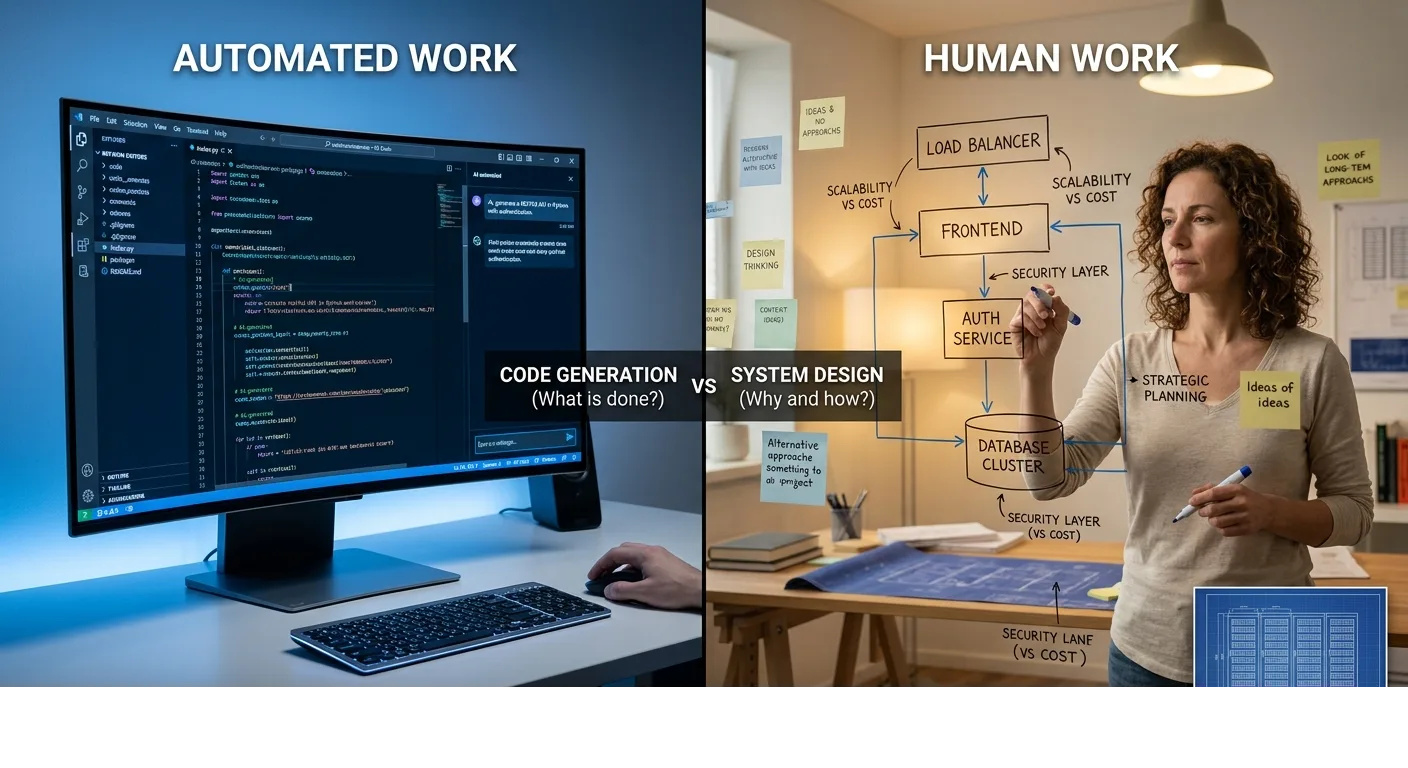
AI excels at execution tasks — writing code, generating tests, explaining errors. The judgment layer — architecture, context, ownership — remains stubbornly human.
The developers most at risk are not the ones who can't code. They're the ones who only code — who built their entire value proposition around producing lines of code quickly, without developing the system-level thinking and judgment that AI can't replicate.
Is Coding Still Worth Learning?
Yes. Emphatically. But the answer requires some nuance that "yes" on its own doesn't capture.
The creator of Claude Code — Anthropic's own agentic coding tool — said in early 2026 that he expects the title "software engineer" to begin disappearing, replaced by "builder." His prediction wasn't that fewer people write code — it was that everyone writes code. Non-technical product managers, designers, analysts — they're all increasingly able to produce working software with AI assistance. The premium you could charge for being one of the few people who could write code is being compressed.
But here's what that actually means in practice: coding as a skill becomes more like writing or spreadsheet competency — something that makes you more capable across many roles, rather than a standalone profession that you sell as your only value. The people who combine coding ability with domain expertise, systems thinking, and communication skills will be more valuable than ever. The people who only code and nothing else are the ones facing pressure.
- Still very worth learning: Web development, mobile development, backend systems, database management — especially if you combine them with AI tool fluency and an understanding of how to work at the architecture level.
- Higher risk if that's all you do: Purely generalist "I can build anything in React" positioning without depth in systems, security, or a specific domain.
- Growing opportunity: Developers who understand AI tooling deeply and can build on top of AI systems rather than compete with them — AI integration work, prompt engineering at a systems level, and AI-assisted product development.
What This Looks Like in Kuwait Specifically
Kuwait's developer job market is connected to global trends but has its own character. A few things are worth understanding about the local picture:
The demand contraction hit later here. Kuwait's tech hiring never reached the speculative peaks of Silicon Valley in 2021. Which means the correction was also less severe. Companies here were already more conservative in their developer hiring — so the over-hiring problem that drove mass layoffs globally was less pronounced locally.
Government and enterprise demand remains solid. Kuwait's public sector digital transformation agenda is still actively spending on development projects — e-government portals, smart infrastructure, digital services. These are not startup-style projects that cut at the first sign of a rate hike. Developer demand from this sector is stable and growing.
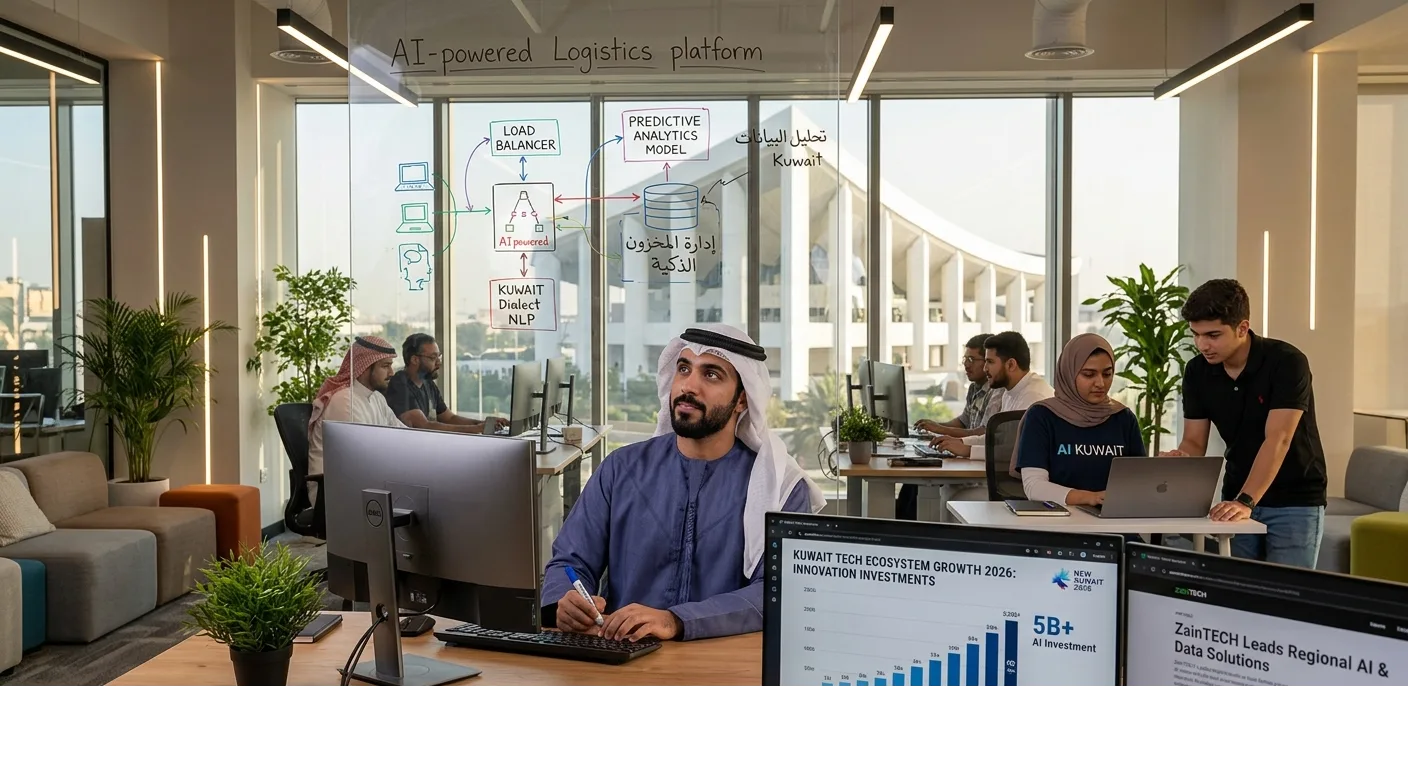
Kuwait's public sector digital transformation projects are providing stable developer demand that global startup-driven market swings haven't disrupted.
The gap that does exist locally is at the junior level — and the cause is partly global (AI compressing junior workloads) and partly local (a large number of bootcamp and self-taught developers entering the market without the depth that employers are now looking for). The developers finding work in Kuwait's current market are the ones who went deep — on full-stack architecture, on specific frameworks relevant to enterprise projects, on understanding systems rather than just syntax.
What Developers Should Actually Do Right Now
If you're a developer — or planning to become one — the situation calls for a specific response, not panic and not complacency. Here's the honest, practical advice:
- Master your AI tools, deeply. Not just "I use Copilot sometimes" — but genuinely understanding what these tools can and can't do, when to trust them, how to review their output critically, and how to direct them toward complex tasks. This is now a core developer skill, not an optional add-on.
- Go deep on systems, not just syntax. The developers getting hired are the ones who understand how systems behave under load, how databases make trade-offs, how APIs fail, and what good architecture actually looks like. Syntax is increasingly AI's job. Systems thinking is yours.
- Add a second dimension. A developer who also understands cybersecurity, cloud infrastructure, data engineering, or a specific industry domain (fintech, healthtech, government systems) is dramatically more valuable than a developer who only develops. Your second dimension is your moat.
- Build real things and show them. The market is saturated with people who have certificates and no portfolio. Build projects that solve real problems. Deploy them. The developer who has three live, working applications they can talk about intelligently will always outcompete the one who completed 15 Udemy courses.
- Aim for depth over breadth in frameworks. Knowing eight frameworks at a surface level is less valuable than knowing one or two deeply. Employers hiring for real projects want someone who has already made the mistakes in their chosen stack — not someone who just started last week.
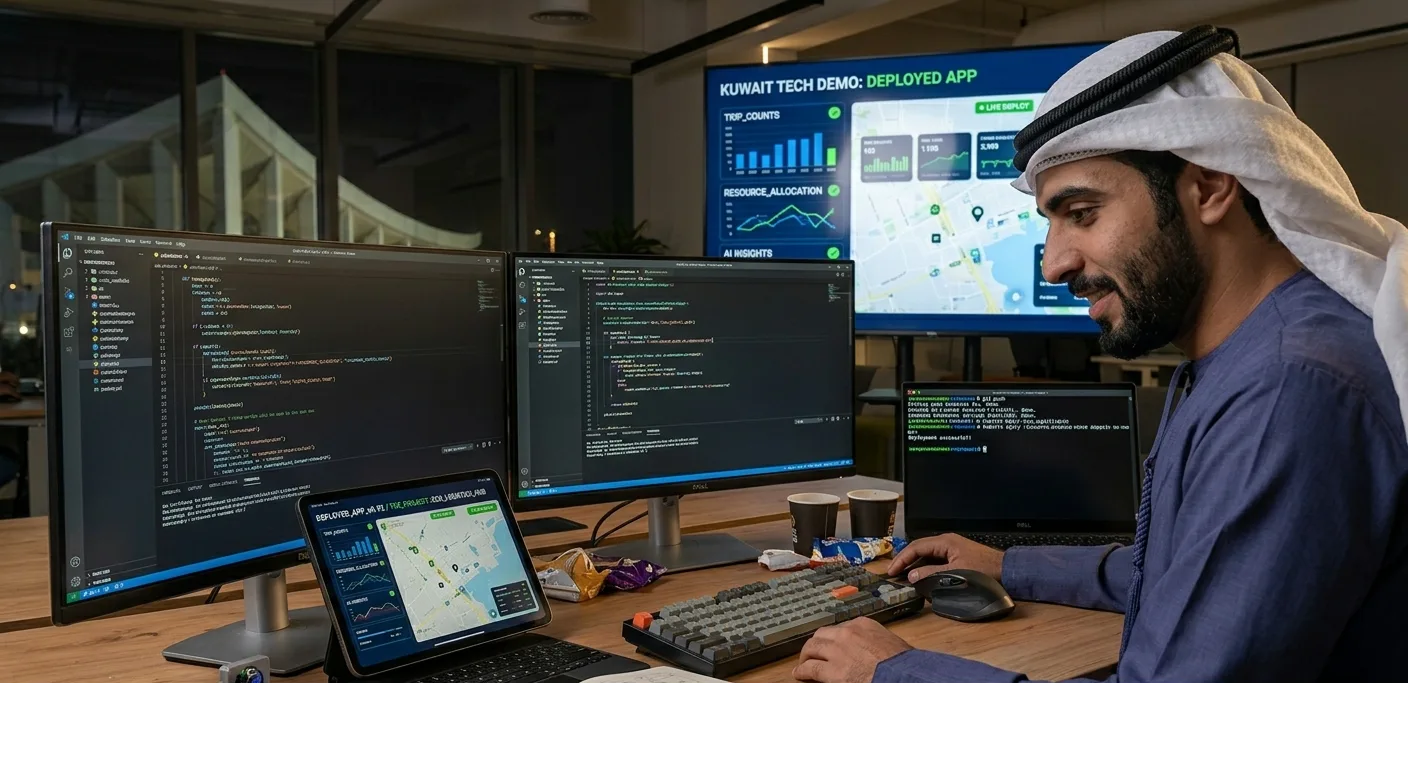
The developers standing out in today's market aren't just coding — they're building, deploying, thinking at the systems level, and showing their work.
Not the End of Developers. The End of a Specific Kind of Developer.
The waterfall in the title is real — but it's not falling into nothing. It's falling into a different landscape. The demand for people who can build software isn't disappearing — it's shifting toward people who build with judgment, not just speed. The entry-level "here's my boilerplate CRUD app" developer is competing with AI now. The developer who understands systems, thinks about architecture, uses AI as a force multiplier, and brings depth in a second area is in a stronger position than at any previous point in the industry's history.
The mistake to avoid is treating the current market difficulty as a signal that development is a dead end. It isn't. It's a signal that the bar has moved. The people who clear the new bar will find the career is better than ever — higher leverage, more interesting work, better tools. The people who don't clear it will find it harder than ever. That gap is widening, not closing.
At ICSA, our web development and IT programs are structured around this reality — teaching systems thinking and real project execution alongside the technical skills. If you're trying to navigate where to focus, our team is happy to map out the clearest path for your specific situation.